Ways to Pay for Assisted Living in California: A Guide for San Jose Families
A practical guide to costs, benefits and local resources for families planning assisted living in San Jose and Santa Clara County.
For many families, the hardest part of planning care is turning several unfamiliar programs into a workable budget. Learning how to pay for assisted living in California starts with two separate questions: what care costs in the San Jose Area, and which resources can legitimately help pay for it. A clear plan compares income, savings, housing and benefits before a move becomes urgent.
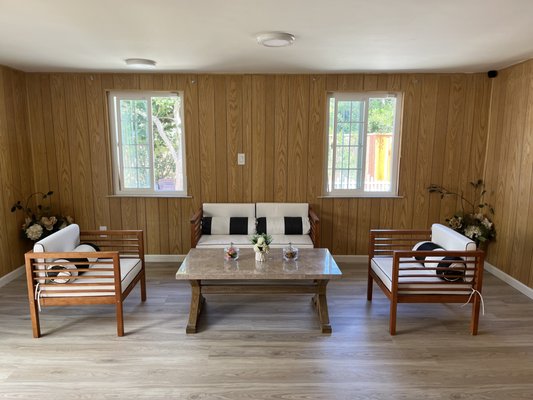
The Rose Garden Elderly Care is a small, home-like residential care home at 2993 Knights Bridge Rd in Berryessa, in north San Jose. Its care offerings include assisted living, memory care and respite care. Families should confirm current licensing, admission status and pricing directly; this guide does not state the home’s rates. The regional figures below are for planning, not a quote for any particular residence.
What assisted living costs in the San Jose Area
The CareScout Cost of Care Survey 2025, with data collected from July through November 2025, reports the following assisted living medians. Its local region is called the San Jose Area.
| Assisted living market | Monthly median | Annual |
|---|---|---|
| San Jose Area | $10,495 | $125,940 |
| California statewide | $7,000 | $84,000 |
| United States | $6,200 | $74,400 |
The San Jose Area median is $3,495 higher than the California median and $4,295 higher than the national median each month. A median is a market midpoint, not a prediction of one home’s charges. Ask for a written schedule of services and fees so that comparisons include the same support, accommodations and extra charges.
How other care options compare
CareScout’s San Jose Area figures also provide context for other arrangements. A non-medical in-home caregiver is listed at $44 an hour. CareScout’s standard 44 hours a week comes to $8,389 a month; 20 hours a week comes to $3,813 a month, and around-the-clock coverage at 168 hours a week comes to $32,032 a month. Assisted living’s monthly median is $2,106 higher than the 44-hour in-home figure. These are not like-for-like budgets: home care may still leave housing, food, utilities and other household expenses to cover separately. Adult day health care is listed at $94 a day and $2,037 a month.
Nursing home medians in the San Jose Area are $14,296 a month for a semi-private room and $18,767 for a private room. The corresponding annual figures are $171,550 and $225,205. Those monthly amounts are $3,801 and $8,272 above the assisted living median, respectively. Nursing homes serve different needs, so these figures are budget context rather than a recommendation about the right setting.
How to pay for assisted living in California with private funds
Private pay often begins with a sustainable monthly budget built from recurring income, accessible savings and a reserve for personal or unexpected expenses. Home equity may also be part of the plan. Selling a home can make equity available; keeping and renting it brings tax, maintenance and management responsibilities. Borrowing against equity adds repayment obligations and risk. A qualified financial, tax or legal professional can help a family review these choices in light of the full estate plan.
Next, make every quote comparable. Ask what the base charge includes, which services may cost extra, how changes in care needs are handled and what notice or deposit terms apply. This overview of assisted living in San Jose can help frame those conversations. At The Rose Garden Elderly Care, families should call for current rates and ask for the services included rather than treating the metropolitan median as its price.
Medi-Cal’s Assisted Living Waiver in Santa Clara County
California’s Medicaid program is Medi-Cal. The Medi-Cal Assisted Living Waiver (ALW) pays for assisted living services in participating RCFEs for people who have full-scope Medi-Cal with no share of cost and need a nursing facility level of care. The participant pays room and board. That distinction matters: waiver approval does not mean every part of a monthly residence charge disappears.
ALW operates in Santa Clara County, but only a limited number of RCFEs participate and there is often a waitlist. Enrollment is through a Care Coordination Agency after an RN assessment. Ask the agency about current steps and timing, and ask any residence directly whether it participates and has availability. Eligibility, provider participation and an open place are separate issues. Do not assume that a home accepts ALW, or that approval guarantees immediate admission.
VA Aid and Attendance for Veterans and surviving spouses
VA Aid and Attendance is an increased monthly amount added to a VA pension for wartime-era Veterans or surviving spouses who need help with daily activities such as bathing, dressing or eating, are bedridden, live in a nursing home because of lost abilities, or have limited eyesight. It is not an automatic payment to every assisted living resident, and eligibility must be established with VA.
Under current VA pension rates effective December 1, 2025, the Maximum Annual Pension Rate (MAPR) with Aid and Attendance is $29,093 for a Veteran with no dependents. Divided by 12, that is a maximum monthly pension of $2,424 if countable income were zero. For a Veteran with one dependent, the annual rate is $34,488, equivalent to $2,874 a month on the same assumption. The VA net worth limit from December 1, 2025 through November 30, 2026 is $163,699.
The pension calculation is MAPR minus countable income. Unreimbursed medical expenses, which can include care costs, above 5% of MAPR can reduce countable income. VA also reviews asset transfers in the 3 years before a claim, and a penalty period can last up to 5 years. These rules make casual asset transfers risky. Confirm current figures and personal eligibility with VA before changing ownership of assets or building a care budget around an expected benefit.
Long-term care insurance and Medicare’s limits
Reading a long-term care insurance policy
Long-term care insurance can pay for services such as assisted living, depending on the policy. Benefits usually begin after an elimination period and when the policyholder needs help with activities of daily living or has cognitive impairment. Read the actual contract and ask the insurer whether an RCFE qualifies, how memory care is treated, what evidence is required, how the elimination period is counted and how claims are submitted. Keep written answers with the policy.
What Medicare does not cover
Medicare has a much narrower role than many families expect. Medicare’s long-term care guidance says it does not cover long-term care, meaning custodial care, if that is the only care needed; most long-term care is custodial. Do not build a plan around Medicare paying ongoing assisted living charges simply because someone needs daily help.
Medicare and Medi-Cal are not interchangeable, and neither program name should be used as shorthand for coverage without checking the rules. Likewise, an insurance policy’s existence does not establish that a claim will be approved. Request written benefit determinations and keep a calendar of deadlines, assessments and follow-up calls.
Using respite care while building a longer-term plan
A funding plan can take time, while caregiving demands continue. The National Institute on Aging explains that respite care gives family caregivers a short-term break and can be provided in the home, at adult day centers or through short stays in residential facilities. San Jose families can discuss respite care as part of a broader plan, while confirming current availability, admission requirements and the scope of support.
For someone living with dementia, ask about supervision, daily routines, communication and the physical environment. Memory care should be understood as support and a structured setting, not as a promise to change the underlying condition. A short stay may also give a family a clearer picture of what questions to ask about longer-term care, without standing in for a full assessment.
Free local guidance and licensing checks
The Eldercare Locator, a service of the U.S. Administration for Community Living, connects families with local Area Agencies on Aging. Call 1-800-677-1116 and ask for the office serving San Jose and Santa Clara County. Use that conversation to identify local guidance on care options, caregiver support and where to verify program eligibility. Bring a concise list of questions rather than assuming one office can approve every benefit.
Licensing is a separate check. In California, assisted living is licensed as a Residential Care Facility for the Elderly by the Department of Social Services, Community Care Licensing Division, under Title 22. RCFEs that advertise or accept residents with dementia must meet additional dementia-care requirements covering staff training, environment and care planning. The division publishes facility inspection reports and runs a complaint hotline. Review available reports and ask how any identified issues were addressed.
Before making a decision, keep one folder with the care quote, program correspondence, insurance documents and questions that still need answers. There is no single route for how to pay for assisted living in California; a San Jose plan may combine private resources with a verified benefit or waiver. For The Rose Garden Elderly Care, confirm current licensing and admission status directly, and request current rates and included services in writing. Revisit the budget whenever care needs or resources change.
Frequently asked questions
What is the median cost of assisted living in San Jose?
CareScout’s 2025 survey lists an assisted living median of $10,495 per month, or $125,940 per year, for its San Jose Area region. The California statewide median is $7,000 per month, while the national median is $6,200 per month. These are market medians, not prices for The Rose Garden Elderly Care. Contact the home directly for current rates, included services and admission availability.
Does Medi-Cal pay for assisted living in Santa Clara County?
Yes, potentially, through Medi-Cal’s Assisted Living Waiver, but it is not automatic and does not cover every charge. The waiver pays for assisted living services in participating RCFEs for people with full-scope Medi-Cal with no share of cost who need nursing facility level of care. Participants pay room and board. It operates in Santa Clara County, but participation among RCFEs is limited and there is often a waitlist. Enrollment goes through a Care Coordination Agency after an RN assessment.
Can VA Aid and Attendance help a San Jose Veteran pay for assisted living?
It may help an eligible wartime-era Veteran or surviving spouse, but it is an increase to a VA pension, not a flat assisted living reimbursement. Effective December 1, 2025, the maximum annual pension rate with Aid and Attendance is $29,093 for a Veteran with no dependents and $34,488 with one dependent. Actual pension depends on countable income and other VA rules. San Jose families should confirm eligibility, current rates and the effect of care expenses with VA before relying on it.
Does Medicare cover assisted living in California?
Medicare does not cover long-term custodial care when that is the only care needed, and most long-term care is custodial. That means San Jose families should not expect Medicare to pay an ongoing assisted living bill simply because daily help is necessary. Medi-Cal is a separate program with its own eligibility rules, and the Assisted Living Waiver has additional participation and assessment requirements. Review any other insurance policy directly with its insurer.
Where can San Jose families get free help with care planning?
The Eldercare Locator, at 1-800-677-1116, connects callers with local Area Agencies on Aging and can help identify the office serving San Jose and Santa Clara County. For licensing questions, California’s Community Care Licensing Division publishes inspection reports and oversees RCFEs. Families considering The Rose Garden Elderly Care in Berryessa should also confirm its current licensing, admission status and pricing directly, and ask what services are included in any quoted arrangement.
Talk with The Rose Garden Elderly Care
If you are weighing care options in San Jose, call (669) 308-4198 or plan a visit. Our team can talk through current availability, rates and next steps. Please confirm all details directly, since published figures and listings change over time.
Sources
- CareScout Cost of Care Survey 2025
- VA Aid and Attendance and Housebound benefits
- VA pension rates (current)
- Medicare: long-term care coverage
- Eldercare Locator (U.S. Administration for Community Living)
- National Institute on Aging: What is respite care?
- ACL: What is long-term care insurance
- California CDSS Community Care Licensing Division
- California DHCS: Assisted Living Waiver fact sheet (PDF)
Cost figures are 2025 medians from the CareScout Cost of Care Survey and are not quotes for The Rose Garden Elderly Care. Program rules and benefit amounts were checked on the linked official pages in November 2026 and can change.