California Assisted Living Licensing and Regulations Explained
A plain-English guide to RCFE licensing, inspections, dementia-care requirements, costs and complaint channels for families comparing assisted living in San Jose.
For an adult child or spouse comparing care in San Jose, California assisted living regulations are most useful when they lead to specific checks: who licenses the home, what the license is called, where inspection records are published, and which additional rules apply when dementia care is offered. Those checks can sit alongside a tour, a care conversation and a realistic budget. They do not replace a family’s judgment about fit, but they help separate verified information from appearances and general marketing language.
California assisted living regulations begin with the RCFE license
In California, assisted living is licensed as a Residential Care Facility for the Elderly, commonly shortened to RCFE. The licensing agency is the California Department of Social Services, Community Care Licensing Division, often called CCLD. The relevant regulatory reference is Title 22 of the California Code of Regulations. Using the terms RCFE, CCLD and Title 22 gives a family a clearer starting point than asking only whether a residence is state approved.
Assisted living, memory care, non-medical in-home care and nursing home care should not be treated as interchangeable labels. For assisted living, the licensing status to verify is the RCFE status of the particular residence. A home-like environment, a small setting or an attractive room does not answer that regulatory question. Likewise, a licensing record does not by itself describe current admission availability, the scope of help a person will receive or the price.
Ask the residence for its current licensing information, then verify that information directly with CCLD. Use the home’s name and address to avoid confusing it with another location. Families considering The Rose Garden Elderly Care should confirm its current licensing, admission status and pricing directly; this article does not assume or state any of those details.
Additional rules for dementia and memory care
California places additional Title 22 requirements on RCFEs that advertise or accept residents with dementia. According to CCLD’s community care licensing information, these dementia-care requirements concern staff training, the environment and care planning. For a family, that means the conversation should go beyond whether a door is secure or whether a residence uses the term memory care.
Ask how staff training relates to the support your relative needs, how the environment is arranged for supervision and daily routines, and how care planning responds to changing needs. Families reviewing the home’s memory care information can use those three subjects to prepare specific questions. Memory care should be understood as support, supervision and environment, not as a promise to improve, stop or reverse dementia.
Use inspections and the complaint hotline carefully
CCLD publishes facility inspection reports and runs a complaint hotline. These are distinct resources. Inspection reports can help a family examine the public oversight record, while the hotline provides a channel for raising concerns. Ask CCLD how to locate reports for the exact residence and how to use the complaint process. Read the reports themselves rather than relying on a secondhand summary, and ask the home to explain anything that is unclear.
An inspection report is not a consumer review, a star rating or a complete description of everyday life in a residence. A tour is not a substitute for the public record, either. Keep both activities in the process: review available records, speak with the residence, and verify current status with the licensing division. If dementia support is relevant, connect the record review to questions about training, environment and care planning rather than treating licensing as a single yes-or-no box.
Applying the checklist in Berryessa
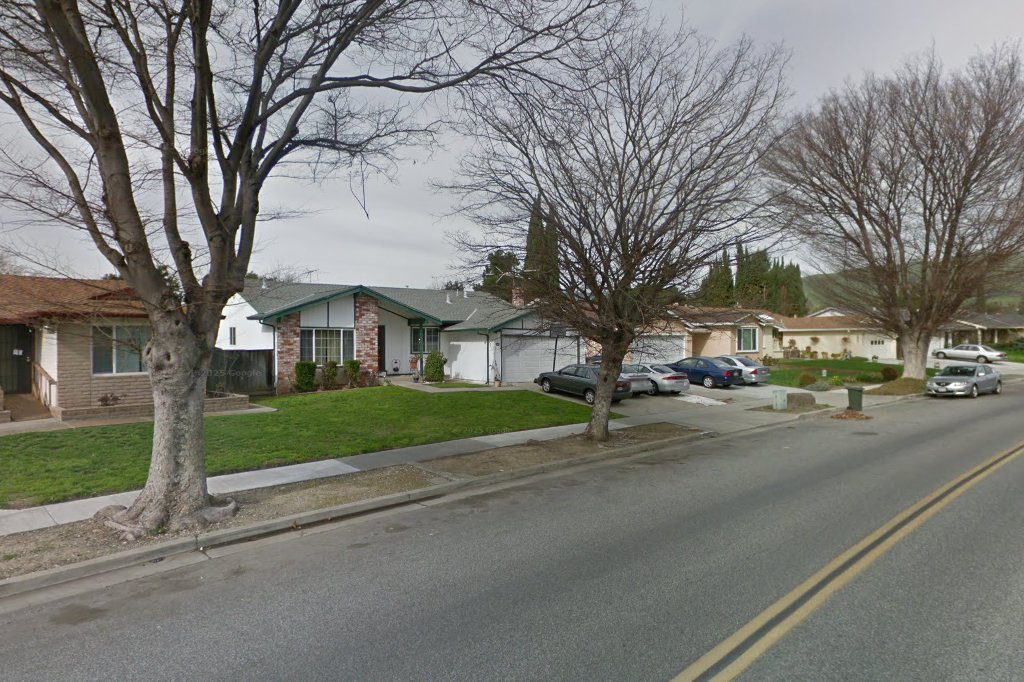
The Rose Garden Elderly Care is a small, home-like residential care home at 2993 Knights Bridge Rd in the Berryessa area of north San Jose, Santa Clara County. A local family can use that exact address when checking public information and when distinguishing the residence from other providers. Its size and residential appearance can be considered during a visit, but they do not answer licensing or admission questions on their own.
While reading about assisted living in San Jose, separate the written description from the details that must be confirmed for an individual. Ask about current admission status, the daily support being discussed, how dementia-related needs would be addressed if relevant, and what is included in current rates. Request clear answers in language that both the older adult and the family decision-makers can understand.
A short stay may also be part of the family’s planning. The National Institute on Aging explains that respite care gives family caregivers a short-term break and can occur in the home, at adult day centers or through short stays in residential facilities. Respite is not a reason to skip licensing, admission or care-planning questions; the length of the stay and the reason for it simply change the practical details to discuss.
Putting San Jose care costs in context
Regulatory verification and cost comparison should happen together, but one cannot stand in for the other. The CareScout Cost of Care Survey 2025, based on data collected from July through November 2025, uses the San Jose Area for the local metro figures. The following are survey reference points, not quotes for any individual residence.
| Care setting and area | Monthly figure | Other survey figure |
|---|---|---|
| Assisted living, San Jose Area | $10,495 median | $125,940 annual |
| Assisted living, California statewide | $7,000 median | $84,000 annual |
| Assisted living, U.S. national | $6,200 median | $74,400 annual |
| Non-medical in-home care, San Jose Area, 44 hours per week | $8,389 | $44 hourly |
| Adult day health care, San Jose Area | $2,037 | $94 daily |
| Nursing home, San Jose Area | $14,296 semi-private | $18,767 private room, monthly |
The San Jose Area assisted living monthly median is $3,495 higher than the California statewide monthly median and $4,295 higher than the national monthly median. At 44 hours per week, the local in-home care monthly figure is $2,106 below the local assisted living monthly median. These options do not provide identical schedules, settings or bundles of support, so the figures should not be read as simple like-for-like substitutions.
For The Rose Garden Elderly Care, call the home directly for current rates and ask what those rates include. None of the survey figures above is a price for the home. A written explanation of charges can be compared with the person’s actual daily needs and with any benefits for which the family may qualify.
Payment sources have different limits
Medicare and long-term care insurance
Medicare’s long-term care coverage guidance says Medicare does not cover long-term custodial care if that is the only care needed, and most long-term care is custodial. Families should therefore avoid assuming that Medicare enrollment will pay an ongoing assisted living bill.
Long-term care insurance can pay for services such as assisted living, depending on the policy. Benefits usually begin after an elimination period and when the policyholder needs help with activities of daily living or has cognitive impairment. Read the actual policy and ask the insurer how its definitions, waiting provisions and documentation requirements apply.
Medi-Cal’s Assisted Living Waiver
Medi-Cal’s Assisted Living Waiver pays for assisted living services in participating RCFEs for people with full-scope Medi-Cal with no share of cost who need a nursing facility level of care. The participant pays room and board. The waiver operates in Santa Clara County, but only a limited number of RCFEs participate and there is often a waitlist. Enrollment occurs through a Care Coordination Agency after an RN assessment. Do not assume that a particular San Jose residence participates.
VA pension and Aid and Attendance
VA Aid and Attendance is an increased monthly amount added to a VA pension for eligible wartime-era Veterans or surviving spouses who need help with daily activities, are bedridden, live in a nursing home because of lost abilities, or have limited eyesight. It is not a general benefit automatically paid to every Veteran.
The VA’s current pension rates list a Maximum Annual Pension Rate with Aid and Attendance of $29,093 for a Veteran with no dependents and $34,488 for a Veteran with one dependent. If countable income were zero, the corresponding maximum monthly pension figures would be $2,424 and $2,874. The net worth limit from December 1, 2025 through November 30, 2026 is $163,699. Pension equals the applicable annual rate minus countable income, so these figures are not automatic payments. VA also reviews certain asset transfers before a claim, and qualifying unreimbursed medical expenses can affect countable income.
A concise verification checklist
California assisted living regulations become practical when each broad topic leads to a document, a named agency or a direct answer. The Eldercare Locator can also connect families with local Area Agencies on Aging for help finding aging services.
- Verify the residence’s current RCFE licensing information with CCLD using its name and address.
- Locate available inspection reports and read them alongside, not instead of, a visit.
- If dementia care is relevant, ask about staff training, environment and care planning under the additional Title 22 requirements.
- Confirm current admission status, respite availability if needed, and exactly what support is being offered to the individual.
- Obtain current rates directly and compare them with Medicare limits, insurance terms, Medi-Cal waiver rules and any potential VA eligibility.
A careful San Jose search does not depend on one record or one conversation. Verified licensing, public reports, clear care discussions and written financial information each answer a different question, allowing families to make a more grounded decision without treating any single source as a guarantee.
Frequently asked questions
Who licenses assisted living in San Jose?
Assisted living in San Jose is licensed by the California Department of Social Services, Community Care Licensing Division, as a Residential Care Facility for the Elderly, or RCFE. Title 22 of the California Code of Regulations contains the relevant rules. Before admission, ask the home for its current licensing information and verify it with the division. Also locate published inspection reports rather than treating a tour or website description as licensing verification.
What extra California rules apply when an RCFE offers dementia care?
An RCFE that advertises or accepts residents with dementia must meet additional Title 22 dementia-care requirements. The identified areas are staff training, environment and care planning. San Jose families can ask what those requirements mean for the support and supervision their relative would receive. Memory care should be discussed as a supportive setting and approach, not as a promise to change the course of dementia.
How can a San Jose family use inspection reports and complaints?
The California Department of Social Services, Community Care Licensing Division runs a complaint hotline and publishes facility inspection reports. Ask the division how to report a concern and what information to provide. Keep the home’s name, address and specific concern together for that conversation. For routine research, read available inspection reports and ask the home to explain them; a complaint channel and an inspection record serve different purposes.
Can Medicare or Medi-Cal pay for assisted living in Santa Clara County?
Medicare does not cover long-term custodial care when that is the only care needed. Medi-Cal’s Assisted Living Waiver can pay for assisted living services in participating RCFEs for people with full-scope Medi-Cal, no share of cost, and a nursing facility level of care. The participant pays room and board. The waiver operates in Santa Clara County, but participating homes are limited and there is often a waitlist. Enrollment goes through a Care Coordination Agency after an RN assessment.
What is the median assisted living cost in the San Jose Area?
CareScout’s 2025 survey reports a San Jose Area assisted living monthly median of $10,495 and an annual figure of $125,940. California’s statewide monthly median is $7,000. These are market reference points, not prices for The Rose Garden Elderly Care. Ask the home directly for current rates and a written explanation of what is included. Also confirm current licensing and admission status before making a decision based on a local median.
Talk with The Rose Garden Elderly Care
If you are weighing care options in San Jose, call (669) 308-4198 or plan a visit. Our team can talk through current availability, rates and next steps. Please confirm all details directly, since published figures and listings change over time.
Sources
- CareScout Cost of Care Survey 2025
- VA Aid and Attendance and Housebound benefits
- VA pension rates (current)
- Medicare: long-term care coverage
- Eldercare Locator (U.S. Administration for Community Living)
- National Institute on Aging: What is respite care?
- ACL: What is long-term care insurance
- California CDSS Community Care Licensing Division
- California DHCS: Assisted Living Waiver fact sheet (PDF)
Cost figures are 2025 medians from the CareScout Cost of Care Survey and are not quotes for The Rose Garden Elderly Care. Program rules and benefit amounts were checked on the linked official pages in November 2026 and can change.