Assisted Living vs Memory Care Costs in San Jose
A practical guide to care needs, daily life, San Jose cost benchmarks and the questions that make a memory care quote comparable.
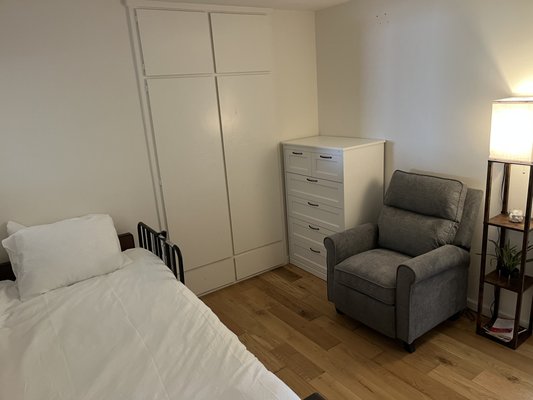
A search for “assisted living vs memory care cost San Jose CA” often begins after a parent needs more help, or after dementia makes an ordinary day less predictable. The wording suggests a simple price comparison, but the two settings are not interchangeable. Assisted living primarily supports daily activities and independence. Memory care adds dementia-specific supervision, structure and environmental safeguards. The right comparison starts with what your parent needs to remain safe, comfortable and respected.
Cost medians can provide context, but they are not quotes for any particular home. A written assessment and an itemized rate sheet are needed before two options can be compared fairly.
What each setting is meant to do
Assisted living in San Jose generally serves older adults who need help with tasks such as bathing, dressing, meals, housekeeping or medication support, but who do not need continuous dementia-specific supervision. Residents may still direct much of their own day, choose activities and move through their routines with varying amounts of assistance.
Memory care is intended for people whose cognitive changes create needs that ordinary assisted living support may not adequately address. It emphasizes consistent cues, supervision, manageable routines and an environment designed around confusion or wandering risks. It is support, not a promise to alter the course of dementia. In California, assisted living is licensed as a Residential Care Facility for the Elderly, or RCFE. The California Department of Social Services Community Care Licensing Division also requires RCFEs that advertise or accept residents with dementia to meet additional dementia-care requirements involving staff preparation, care planning and the environment.
Daily life, staffing and surroundings
Two residences can look similar during a brief tour yet function very differently. Ask staff to describe an ordinary morning, a difficult evening and the response when a resident needs unexpected help.
| Feature | Assisted living | Memory care |
|---|---|---|
| Primary focus | Personal assistance while preserving choice and independence | Personal assistance with added cognitive support and supervision |
| Daily routine | Often more self-directed, with activities and help available | Often more consistent, with simpler transitions and repeated cues |
| Environment | Ask about accessibility, call systems and safe outdoor access | Ask about exit safeguards, clear signage, sightlines and secure outdoor areas |
| Staff preparation | Personal care, emergency response and individual care planning | Additional dementia communication, supervision and care-planning preparation |
| Supervision | Based on scheduled assistance and assessed needs | May involve more frequent observation, redirection and routine support |
| Reason to reassess | Needs exceed the assistance the residence can reliably provide | Supervision, routines or safeguards no longer match current needs |
Do not assume that a small home automatically provides more attention, or that a larger community automatically provides safer supervision. Ask who is on duty during the day and overnight, how requests are answered, how care is documented and what happens when several residents need help at once. For memory care, also ask how staff respond to exit-seeking, sleep disruption or distress without relying on a one-size-fits-all routine.
Assisted living vs memory care cost in San Jose, CA
According to the CareScout Cost of Care Survey 2025, the assisted living monthly median for the San Jose Area, the metro region used for Santa Clara County, is $10,495, with an annual figure of $125,940. California’s statewide monthly median is $7,000, or $84,000 annually. The national monthly median is $6,200, or $74,400 annually. The San Jose monthly median is $3,495 higher than the state figure and $4,295 higher than the national figure.
These are assisted living benchmarks, not memory care rates. They should not be increased by an assumed percentage to create a memory care estimate. A memory care quote may reflect a different room arrangement, care plan, supervision pattern and physical environment. The only reliable comparison is between written quotes based on the same person’s assessed needs, with included services and possible additional charges clearly identified.
Build a quote that can be compared
For assisted living vs memory care cost in San Jose, CA, request more than a base monthly figure. Ask each provider to explain the quote in writing and to identify which services could lead to a revised care plan or rate.
- What housing, meals, housekeeping, laundry and personal assistance are included?
- How are medication support, continence care, mobility assistance and nighttime needs handled?
- Which memory care supervision or environmental features are part of the quoted arrangement?
- Are there separate care-level charges, one-time fees or optional service charges?
- When is a resident reassessed, and how much notice accompanies a rate change?
- What happens if needs increase beyond what the residence can support?
Families considering The Rose Garden Elderly Care should call for current rates and an itemized explanation rather than treating a metropolitan median as the home’s pricing. Admission status, the proposed care arrangement and current licensing should also be confirmed directly.
Other local care benchmarks can add context
CareScout’s San Jose Area figures show why the full schedule of support matters. Non-medical in-home care is listed at $44 an hour and $8,389 a month at 44 hours a week. Adult day health care is listed at $94 a day, or $2,037 monthly. Nursing home monthly medians are $14,296 for a semi-private room and $18,767 for a private room.
None of these figures is a memory care price. They simply help frame alternatives. Home care still requires a suitable home and coordination as hours increase. Adult day support may cover only part of a family’s needs. A nursing home serves a different level of care and should not be treated as a direct substitute for assisted living.
How to tell which support your parent needs now
A diagnosis alone does not settle the decision. Look at repeated, observable situations and at whether the current plan works on difficult days as well as calm ones.
- Assisted living may remain appropriate when help with personal care, meals and medication routines is sufficient, and your parent can move through the residence without unsafe confusion.
- A memory care assessment deserves attention when wandering, exit-seeking, getting lost inside a familiar building, unsafe appliance use or persistent disorientation creates recurring risk.
- Also consider whether your parent can use a call system, follow an evacuation instruction, recognize staff and accept assistance without the current routine repeatedly breaking down.
- Include the caregiver’s capacity. Exhaustion, missed work and constant overnight vigilance are relevant parts of the safety picture.
Sudden confusion or an abrupt change in functioning warrants prompt clinical advice rather than an assumption about dementia progression. For families who need temporary relief, the National Institute on Aging explains that respite care can be provided at home, through an adult day center or during a short residential stay. Availability, assessment requirements and the suitability of a short stay should be confirmed with each provider.
Payment sources require careful reading
Medicare’s long-term care guidance states that Medicare does not cover long-term custodial care when that is the only care needed, and most long-term care is custodial. Families should not build an assisted living or memory care budget around an assumption that Medicare will pay the ongoing residential bill.
Long-term care insurance may help, depending on the policy. The Administration for Community Living’s insurance overview notes that benefits commonly depend on an elimination period and triggers involving daily activities or cognitive impairment. Ask the insurer whether the proposed RCFE and care arrangement qualify, how benefits are documented and what limits apply.
VA Aid and Attendance can increase a pension for eligible wartime-era Veterans or surviving spouses who meet care and other criteria. Income, assets, unreimbursed medical expenses and prior asset transfers can affect a claim, so individual guidance is important. Separately, California’s Assisted Living Waiver fact sheet describes Medi-Cal support for assisted living services in participating RCFEs for eligible people who need nursing facility level of care. Participants pay room and board. The waiver operates in Santa Clara County, but participation is limited and there is often a waitlist; it should not be assumed for any particular home.
A careful next step in Berryessa
The Rose Garden Elderly Care is a small, home-like residential care home at 2993 Knights Bridge Rd in the Berryessa area of north San Jose. Families comparing it with other settings can use the same needs assessment, feature questions and itemized-quote process. A smaller environment should still be evaluated for its actual staffing pattern, supervision, routines and ability to meet the proposed care plan.
Before deciding, confirm current RCFE licensing and admission status, ask how applicable dementia-care requirements are met, and review available state inspection information. Tour with your parent’s real routines in mind, including mornings, evenings, personal care preferences and responses to unfamiliar situations. The strongest choice is not simply the setting with more services. It is the setting that can explain specifically, consistently and in writing how it will support your parent with dignity.
Frequently asked questions
Is memory care always more expensive than assisted living in San Jose?
Not by a universal formula. CareScout reports a San Jose Area assisted living median of $10,495 per month, but that is not a memory care rate. Memory care pricing depends on the provider, room arrangement, supervision needs and service plan. Ask each San Jose home for an itemized quote and a written explanation of when care-level charges can change.
Does Medicare pay for memory care in San Jose?
Medicare generally does not pay for long-term custodial care when that is the only care needed, whether help is provided at home or in a residential setting. That can leave most ongoing assisted living or memory care support unpaid. Separately covered skilled services have their own rules. For eligible Santa Clara County residents, Medi-Cal’s Assisted Living Waiver may help with assisted living services at participating homes, but room and board, eligibility, participation and waitlists need separate review.
Can a parent move from assisted living to memory care in the same San Jose home?
Sometimes, but families should not assume that a transition is available. Ask whether the residence can meet new dementia-related needs, whether it has an appropriate memory care arrangement and whether current admissions allow a transfer. Request the reassessment process in writing, including who decides that needs have changed and how much notice families receive. If the home cannot provide the needed support, a move to another licensed setting may be necessary.
How can a family arrange respite care in Berryessa or north San Jose?
Respite care can involve in-home help, an adult day program or a short residential stay. Availability varies, so families considering The Rose Garden Elderly Care should ask directly whether a respite stay is currently available, how long it can last, what assessment is required and which services are included. A short stay can give a caregiver a break, but it should not be treated as proof that a permanent placement will later be available.
How do I check licensing for a San Jose residential care home?
In California, assisted living homes are licensed as Residential Care Facilities for the Elderly by the Department of Social Services Community Care Licensing Division. Ask the home for its current licensing information and confirm it with the state. Review available inspection reports and ask how complaints or deficiencies were addressed. If dementia care is offered or advertised, also ask how the home meets California’s additional staff training, environment and care-planning requirements.
Talk with The Rose Garden Elderly Care
If you are weighing care options in San Jose, call (669) 308-4198 or plan a visit. Our team can talk through current availability, rates and next steps. Please confirm all details directly, since published figures and listings change over time.
Sources
- CareScout Cost of Care Survey 2025
- VA Aid and Attendance and Housebound benefits
- Medicare: long-term care coverage
- National Institute on Aging: What is respite care?
- ACL: What is long-term care insurance
- California CDSS Community Care Licensing Division
- California DHCS: Assisted Living Waiver fact sheet (PDF)
Cost figures are 2025 medians from the CareScout Cost of Care Survey and are not quotes for The Rose Garden Elderly Care. Program rules and benefit amounts were checked on the linked official pages in November 2026 and can change.